The price you pay to soften crow’s feet comes down to three variables that rarely get explained clearly: how many units you actually need, what your injector charges per unit, and how often you plan to maintain results. When patients ask me for a simple number, I give a range, then I show the math in plain language. That way, you can compare quotes, judge “deals,” and budget for the year without surprises.
What crow’s feet treatment typically costs
Most practices price cosmetic Botox by the unit. In the United States, the botox price per unit commonly falls between 12 and 20 dollars. Coastal metro clinics and top rated injectors trend higher. Memberships or botox specials near me searches sometimes reveal 10 to 12 dollars per unit for limited promotions, but the average you can rely on sits around 14 to 18.
How many units are used for crow’s feet? A standard, full-strength treatment is often 8 to 12 units per side, placed across 3 to 4 injection points. That means 16 to 24 units for both eyes. Lighter dosing, sometimes called baby botox or micro botox, may use 6 to 8 units per side for someone with fine lines, strong cheek elevators, or a risk of smile changes.
Putting those pieces together:
- At 16 to 24 units total and 14 to 18 dollars per unit, you’re looking at roughly 225 to 430 dollars per session. At higher-end pricing, say 20 dollars per unit, the same dosing lands between 320 and 480 dollars. If you happen to find affordable botox near me in the 11 to 13 dollar range, expect 175 to 310 dollars.
I advise patients to ask for both a per-unit rate and a written estimate of typical dosing. A flat “per area” fee can look simple, but it often masks the dose. If you have deep, lateral smile lines and get only 8 to 10 total units because of an area-based cap, the result will likely be underwhelming and short-lived. Understanding how many units for crow’s feet you’re quoted is the most reliable way to compare.
How long crow’s feet Botox lasts, in practice
Most people feel the effect by day 3 to 5, notice the peak at day 10 to 14, and maintain a satisfactory softening for 10 to 14 weeks. Around the 3-month mark the movement returns gradually, not all at once. This timeline holds for well-placed, properly reconstituted onabotulinumtoxinA in typical doses.
Here are the variables that shift longevity:
- Dose: Lower doses fade sooner. If you had baby botox near me with 6 to 8 units per side, expect closer to 8 to 10 weeks of visible softening. Muscle strength: People with expressive smiles, strong orbicularis oculi, or frequent squinting may metabolize sooner. Product: Dysport and Xeomin perform similarly for most, with small differences in spread and onset. Daxxify can last longer, often 5 to 6 months, but it costs more per unit and uses different dosing units. If you price-shop, clarify which product is being used to keep comparisons clean. Technique: Even spacing and depth matter. Too superficial and you can bruise or get minimal effect. Too deep at the orbital rim and you risk flattening the smile or an odd eye shape. Precise technique helps you get a full 12 or so weeks from the session.
You can extend longevity modestly by staying on schedule for the first year. Consistent dosing at the 3 to 4 month mark can “train” the muscle to recruit less aggressively, so lines etch less deeply. That rhythm yields smoother skin that is easier to maintain with fewer units over time. This does not mean you must keep doing it forever. It means when you do, you benefit doubly from ongoing collagen protection.
Where the money actually goes
Patients often assume the vial cost dictates the price. It’s part of it, not all of it. Your fee reflects the drug, sterile supplies, safe storage, injector time, and the operator’s skill. That last piece is not fluff. The difference between natural eye smiles and spocking or smile flattening often comes down to a few millimeters of placement and an adjusted dose at each injection site. If you are comparing botox injections near me and the numbers vary widely, ask the clinic to explain Cornelius NC botox what is included, who injects, and how many units are typical for your pattern.
One more detail that matters: reconstitution and handling. Botox arrives as a powder. It is mixed with sterile saline to a specific concentration. Too much saline can lead to more spread and less potency per unit. Too little and the product can be harder to place gently. Reputable offices adhere to consistent dilution and cold chain storage. This consistency is part of what you pay for.
Do crow’s feet need fewer units than the forehead?
Often, yes. The forehead frontalis muscle is large and variable, so Botox for forehead wrinkles can require 8 to 20 units to control lines while preserving lift. Glabellar frown lines, the “11s,” typically use 16 to 25 units for a full treatment. By comparison, crow’s feet are compact lateral bands. That is why total units for the outer eye area are usually 16 to 24 for both sides combined.
Here is how the three common upper-face zones compare in broad strokes:
- Botox cost for forehead lines: 150 to 360 dollars depending on unit needs and rate. Botox cost for frown lines: 250 to 500 dollars, often higher if the glabella is strong. Botox cost for crow’s feet: 225 to 480 dollars in most markets.
Each area can be treated on its own, but combination treatment tends to look more balanced. If budget is tight, treating glabella and crow’s feet together often yields the most visible refresh since the center scowl and the smile lines drive much of the aged or tired look. Many clinics offer botox deals near me for multi-area packages. Ask to see the unit breakdown rather than simply accepting an “area” bundle.
How an experienced injector doses the lateral eye
On a typical first visit, I assess the smile at rest and at maximum expression. I watch for cheek elevation, eye shape, depth of static lines, and crow’s feet that track too far downward toward the malar area. Those patterns determine injection points and whether to use 2, 3, or 4 small aliquots per side. In more animated patients, I’ll start in the mid range, usually 10 to 12 units per side, to guarantee longevity and natural smile dynamics. On a first-timer who worries about stiffness, I may open with 8 units per side and schedule a 2-week check to add 2 to 4 units if needed.
A useful insight: treated crow’s feet look best when the injector preserves a touch of lateral crinkle while turning off the deep creasing. The goal is an easy smile, not a blank one. If you have seen a “frozen” eye, it was usually a matter of dose or inferior migration, not an inevitable outcome.
What to expect at your first crow’s feet appointment
The appointment is short. After a quick consent, we clean the skin, sometimes use a vibration device or ice for comfort, and make 3 to 4 small injections per side. Patients describe it as a series of pinches that last a second each. The total active time is five minutes, maybe less. Most redness settles in 10 to 20 minutes. Makeup can go on gently after a couple of hours if the skin looks calm.
Bruising is the most common minor side effect. The lateral eye has tiny vessels that can be nicked. If you’re prepping for an event, plan treatment at least 2 weeks prior, so any small bruise has time to clear and the product has fully settled.
As for aftercare, keep it simple. Do not rub the area for the rest of the day. Skip vigorous workouts, hot yoga, or saunas for 24 hours. Sleep on your back the first night if you can. These steps minimize spread and lower the chance of unevenness.
How to make results last closer to the 12 to 14 week mark
Two choices improve longevity more than any serum or hack: choose an adequate dose, and don’t wait until full movement returns to retreat. If your last few units wear off before you get back in, the muscle reheats, so to speak, and it can take more units to quiet it again.
There are supportive tactics worth considering. Sun protection helps by reducing squinting. High-SPF sunscreen and sunglasses are not just skin care advice, they cut the movement that etches lines. If you drive often in bright conditions, a polarized lens makes a real difference. Hydration and skincare won’t change the neurotoxin timeline, but a thin peptide eye serum and a night retinoid can improve skin quality so the area looks better as the Botox fades.
If your goal is to stretch the calendar significantly, you can ask your injector about Daxxify, which uses a peptide tether to increase binding. It costs more per session and the unit math is different, but many patients get five months or more in the crow’s feet and glabella. Weigh that against the higher price per visit.
When “cheap Botox” costs more
I see two failure patterns that end up expensive. The first is underdosing from ultra-low per-area pricing. You feel like you got a bargain, then you’re back in eight weeks to do it again. Over a year, you pay more for less consistency. The second is poorly placed units that need a touch-up. Correcting migration or smoothing asymmetry requires more product and time, and sometimes you simply have to wait it out.
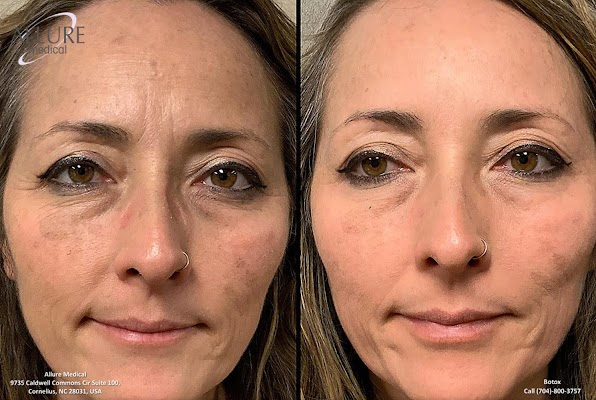
If you are searching botox near me or cosmetic botox near me, look beyond the ad headline. Read before and afters for the lateral eye specifically. Crow’s feet are a distinct area. The injector’s portfolio should show natural smiles that keep their shape, without that pinched outer corner or overly flat skin.
How many sessions per year to budget for
Most people schedule crow’s feet every 3 to 4 months. That equals three to four visits per year. With typical dosing and a local botox providers mid-market rate, the annual spend sits in the 900 to 1,600 dollar range for this area alone. Combination treatments for forehead and glabella increase the annual figure, often to 1,800 to 3,000 dollars if you stay consistent. Memberships can trim 10 to 20 percent if you prefer predictable spending.
If you prefer fewer visits, ask about higher dosing within safe limits or Daxxify. If you prefer lower per-visit cost, accept the shorter duration of a lighter dose. There is no universal right answer. Your calendar, budget, and tolerance for fade drive the plan.
Preventative dosing in your 20s and 30s
Preventative botox for crow’s feet works when you see etched lines that remain at rest. If your lines only show at full smile and the skin springs back smooth, start conservatively. Many patients in their late 20s do well with 6 to 8 units per side twice a year. That strategy slows the engraving without changing your expression. If you are in your 30s with early static lines and a strong squint, three sessions per year with 8 to 10 units per side often keeps the skin glassier without heavy dosing.
The trade-off is straightforward. Preventative dosing costs less per year but may not deliver a dramatic before and after. It is about preservation, not transformation. If you wait until lines deepen, plan on a full dose at first, sometimes alongside skin treatments like microneedling or light resurfacing to soften etched creases that Botox alone cannot erase.
Risks, side effects, and how to avoid a smile you do not recognize
Crow’s feet are relatively forgiving, but the area borders the zygomaticus and risorius muscles that lift the smile. Over-injection too far inferiorly can soften that lift and make the smile look less dynamic. That is the side effect patients fear most. Conservative lower placements and attention to your unique smile pattern prevent it.
You can expect fleeting redness, small bumps that settle within an hour, and possible pinpoint bruising. Mild headache can occur, though it is less common in the lateral eye than in the forehead. A droopy eyelid typically relates to glabellar spread into the levator, not the crow’s feet area. Still, any unexpected change should be reported, especially if you notice asymmetry or a smile shift. Good clinics schedule a 10 to 14 day check so small adjustments can be made while the product is in its active window.
If you bruise easily, pause fish oil, high-dose vitamin E, ginkgo, and non-essential NSAIDs for several days if your physician agrees. Arnica can help with discoloration, though the evidence is mixed. Icing gently before and after reduces swelling and the chance of a vessel nick.
Crow’s feet cost versus other popular areas and add-ons
If you are mapping out a budget, here’s the rough order of typical session costs, recognizing that every face is different:
- Glabella costs more than crow’s feet in most cases because it needs more units. Crow’s feet and forehead are similar, with wide variance due to forehead height and muscle pattern. Add-ons like a subtle eyebrow lift use small additional units at the tail of the brow. Expect 20 to 60 dollars more if priced per unit. Small adjuncts, such as botox for bunny lines along the nose, often require 4 to 6 units total. That adds roughly 60 to 120 dollars at common rates.
When combining areas, be mindful of interdependence. Treating the forehead without the glabella can cause a heavy brow, because relaxing the forehead removes your natural lift while the scowl muscle remains active. Around the eyes, balanced dosing between the crow’s feet and the lateral brow tail creates a smoother, more open look that still moves.
Choosing a provider without chasing gimmicks
The phrase best botox near me gets you marketing pages. What you actually want is an injector who asks about how you smile in photos, whether you squint outdoors, if you sleep on a particular side, and how you feel about a tiny crinkle at the corner of your eye. Those details steer the dose and placement.
When you call clinics:
- Ask for the botox price per unit and the typical units for crow’s feet at your age and muscle strength. Clarify the product: Botox, Dysport, Xeomin, or Daxxify. Keep comparisons apples to apples. Request to see crow’s feet before and after images, ideally on faces similar to yours. Ask about a 2-week follow-up and any touch-up policy. Confirm who injects you each time. Consistency helps with dose dialing.
Same day botox appointment slots are fine if you have done your homework. Walk in botox near me promotions are fine if the clinic can still answer those five questions. A deal is only a deal if you get the right dose, placed precisely, with the follow-up you need.
How crow’s feet interact with other aesthetic choices
Filler under the eyes does not replace crow’s feet Botox. They do different jobs. Neurotoxin softens dynamic movement. Filler supports volume. If you are considering both, treat movement first, then evaluate static lines and hollows once expressional creasing quiets. For patients with etched lateral lines that persist at rest, pairing neuromodulator with a light resurfacing treatment, like fractional non-ablative laser, cleans up residual texture more than adding units would.
If you are curious about a Botox eyebrow lift, the lateral eye treatment can be tuned to allow a few millimeters of lift at the tail. It requires a balanced plan across the forehead and glabella. Expect a modest change that photographs nicely but does not look artificial.
A sample cost plan for a first year
Let’s map a reasonable plan for a 34-year-old with moderate crow’s feet and a strong smile, using a mid-market rate of 16 dollars per unit:
- Visit 1: 10 units per side, 20 total. Cost: 320 dollars. Visit 2 at 12 weeks: same dose, minor tweak in placement if needed. Cost: 320 dollars. Visit 3 at 24 weeks: if movement is milder this round, consider 9 per side. Cost: 288 dollars. Visit 4 at 36 weeks: return to 10 per side before the holidays, for photo season. Cost: 320 dollars.
Annual spend: 1,248 dollars for consistent softening without losing your smile lines entirely. If you decide to add glabella in visits 2 and 4, that could add 240 to 400 dollars each time depending on dose, bringing the yearly total closer to 1,800 to 2,000 dollars.
If you wanted fewer visits, you could ask about Daxxify for the crow’s feet at visits 1 and 3. You might spend 450 to 700 dollars per session depending on the market but cut down to two sessions per year. The break-even point varies by clinic. Ask for both options in writing.
Troubleshooting common disappointments
Two complaints come up in consults: “It wore off too fast,” and “My smile looks off.”
If your Botox wearing off early bothers you, verify the dose and product used, then review your schedule. Were you at full smile strength for a month before you returned? That gap accelerates the fade. Ask your injector to bump the units modestly or tighten the interval one time. If you are still fading in eight weeks after a robust dose, consider a different product or provider.
If your smile looks odd, it is usually a placement issue. A few units placed too low can weaken a smile elevator. The fix is time more often than a reversal, since hyaluronidase does not apply to neuromodulators. The lesson is to start conservatively, review your smile at two weeks, then build to your sweet spot slowly. Your injector should document exact points and micro-doses for consistency.
The bottom line on pricing and longevity
Crow’s feet treatment is one of the most cost-effective uses of Botox because the area needs a moderate number of units and the results play well in photos and in person. Typical sessions cost 225 to 480 dollars depending on dose and market, with results that last about three months. You can choose lighter dosing for a softer look with shorter longevity, or full dosing for a 12 to 14 week effect. Over a year, plan for three to four visits if you want continuous smoothness.
To make a smart choice, ask for the per-unit rate, confirm how many units for crow’s feet are typical for your pattern, and schedule a two-week check. Combine those three habits and you will avoid most surprises, get consistent results, and know exactly what you are paying for.
If you are searching botox consultation near me or botox appointment near me, bring this framework to your first visit. It will help you compare offers, spot red flags, and leave with a plan that respects both your smile and your budget.